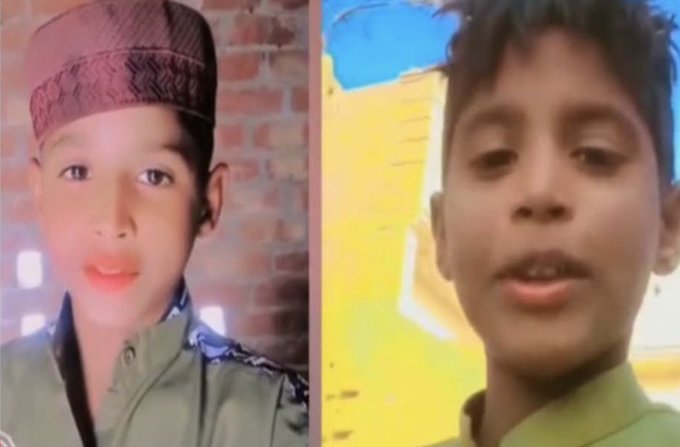
Sheikhupura, Punjab — A 14-year-old Christian boy from Kotla Sharif village in Sheikhupura was allegedly converted to Islam by his employer and forcibly taken back after local elders briefly secured his return to his parents, according to family members and community sources.
The boy, Jameel Masih, is the fifth of six children of Sharif Masih, a labourer. His family states that he had been working for the past three to four years for a local landlord, identified as Muhammad Boota Bajwa. Instead of receiving regular wages, the teenager was reportedly compensated annually with wheat.
Jameel’s mother said that villagers informed her of her son’s alleged conversion. “We were told that our son had accepted Islam and that we could no longer meet him,” she said, urging authorities to intervene and return her minor child.
Following complaints by the family, village elders convened a panchayat (village council) and concluded that, as a minor, the boy could not legally change his religion. He was subsequently handed back to his parents. However, relatives allege that only hours later, the employer arrived at their home with several associates and forcibly took the boy away again.
Rights advocates note that this is not an isolated incident. In rural areas of Punjab, where many Christians belong to economically marginalised and largely illiterate communities, children often begin working at a young age in live-in arrangements. Families typically visit weekly or as permitted, leaving minors vulnerable to exploitation, extended working hours, and alleged coercion.
Unfortunately, Pakistan lacks a clear federal law stipulating a minimum age for religious conversion. In the absence of explicit legal safeguards, cases involving minors are frequently framed as matters of “religious choice,” even where allegations of pressure or undue influence exist. Critics argue that crimes masked under the guise of religion often go unpunished, with parents losing custody of their children while police and courts sometimes defer to statements attributed to minors regarding their preferred residence or faith.
Under international human rights standards, including protections relating to child welfare and freedom of religion, any conversion involving a minor must be carefully scrutinised to ensure it is free, informed, and without coercion. CLAAS has been campaigning and calling for legislative reform to establish a clear minimum age for conversion, along with stronger enforcement mechanisms to protect vulnerable children from exploitation and forced religious change.


