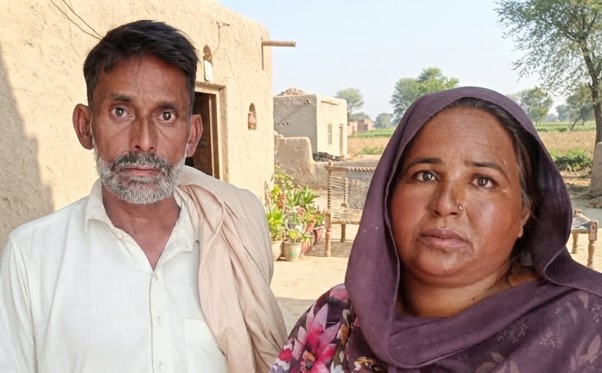
LAHORE, Pakistan: A Christian father of four who says he endured approximately 12 years of exhausting farm work, threats and restrictions on his freedom has been released following CLAAS-supported legal intervention through the Lahore High Court.
Maqsood Masih, from Village Varuan in Sheikhupura district, was freed on 6 October 2026 after telling the court that he no longer wished to continue working for his employer.
He alleges that debt-related demands prevented him from leaving and that he faced restrictions on attending church, visiting relatives and spending time with his family.
A Loan for a Room Became a Barrier to Freedom
Maqsood worked for a landowner identified as H. Gujjar, tending fields and caring for livestock at a farmhouse. According to his wife, Shahnaz Bibi, he was expected to remain available around the clock, leaving little time for rest or family life.
Approximately four years after he began the employment, the family borrowed Rs200,000 to build a room on their own land.
Repayments were deducted from his wages. Yet Maqsood said that after approximately eight years of deductions, the amount he was told he owed had increased rather than declined.
He alleges that demands for repayment, accompanied by threats, prevented him from leaving. For a family already struggling to afford basic necessities, the disputed debt became an obstacle they could not overcome without outside help.
Low Wages and a Family Struggling to Survive
Maqsood reported receiving Rs12,000 a month. Shahnaz said this later increased to approximately Rs15,000, supplemented by one kilogram of milk daily and 40 kilograms of wheat each month.
The household still struggled financially. According to Shahnaz, their two sons and two daughters helped her work in vegetable fields to meet the family’s daily needs.
Even when Maqsood visited home, she said, repeated telephone calls pressured him to return to the farmhouse.
Restrictions on Faith, Rest and Family Life
Maqsood described restrictions on attending church, participating in prayers and religious ceremonies, and visiting relatives.
On one occasion, when he tried to attend a close relative’s funeral, people allegedly associated with the landowner followed him and instructed him to return to work.
He also said he was required to continue working during illness. Although medicine was provided, he alleged that he was not given adequate rest. Shahnaz described two periods of serious illness during which her husband had insufficient time to recover.
These accounts raise serious concerns about alleged bonded labour, freedom of movement, religious freedom and the vulnerability of workers who lack the resources to challenge exploitation.
His Wife’s Appeal for Help Led to Court Action
Shahnaz initially sought help from other landowners and members of Gujjar’s family, but these efforts did not secure her husband’s freedom.
On 25 September 2026, she approached CLAAS’s local partner, based in Lahore, for legal aid and support.
With CLAAS’s support, a lawyer acting on her behalf filed a petition before the Lahore High Court on 28 September, seeking Maqsood’s production before the court.
The following day, Justice Sadiq Mahmud Khurram directed the relevant police officer to produce him on 6 October.
Police complied. After Maqsood told the judge that he no longer wished to continue the employment, the court ordered his release.
A New Beginning After Years of Reported Exploitation
Following the hearing, Maqsood and Shahnaz visited the local partner’s office to express their gratitude.
His release gives the family an opportunity to live together and rebuild their livelihood after years in which, they say, work and debt controlled their lives.
The court intervention secured Maqsood’s freedom to leave the employment. His allegations concerning threats, wage deductions and the outstanding debt require further investigation.
For CLAAS, the case highlights how poverty and a lack of access to legal representation can leave vulnerable Christian workers exposed to exploitation. Maqsood’s account of restrictions on church attendance raises additional concerns about his freedom to practise his faith.
Through free legal assistance and practical support, CLAAS helps families seek protection and challenge injustice through the courts. For Maqsood and his family, that assistance has opened the way to a life beyond the employment he says he was unable to leave.