Supreme Court Acquits Final Three Convicts in 2014 Burning Alive of Christian Couple, Ending All Convictions in Landmark Mob Violence Case
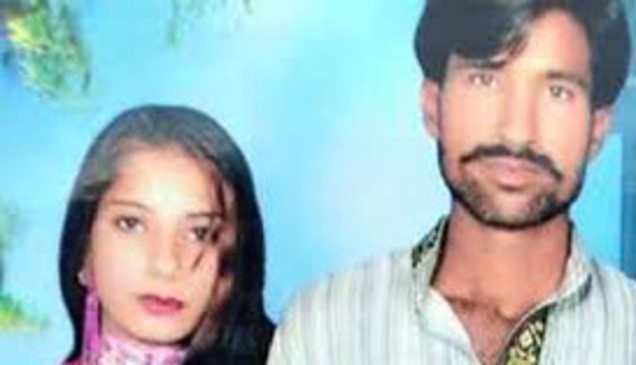
ISLAMABAD, Pakistan: More than eleven years after one of Pakistan’s most horrific incidents of mob violence against Christians, the Supreme Court of Pakistan has acquitted the remaining three men who had been sentenced to death for the brutal killing of Christian couple Shahzad Masih and his pregnant wife, Shama Bibi, effectively ending all convictions in the landmark case.
The judgment, delivered on 9 July 2026 by a three-member bench headed by Justice Malik Shahzad Ahmad Khan, overturned the death sentences of Irfan, Mehdi and Riaz, ruling that the prosecution had failed to establish their guilt beyond reasonable doubt due to inconsistencies in witness testimony and weaknesses in the evidence. The Court also dismissed the Punjab Government’s appeal against the Lahore High Court’s earlier acquittal of 102 other accused.
The ruling means that no individual now stands convicted for the 4 November 2014 lynching and burning alive of the Christian couple in Kot Radha Kishan, Kasur District—a case that shocked Pakistan and drew widespread international condemnation.
A Tragedy That Horrified the World
Shahzad Masih, 26, and his wife Shama Bibi, 25, who was several months pregnant, worked as bonded labourers at a brick kiln in Chak 59, Kot Radha Kishan. The couple were parents of three young children.
According to police records, eyewitness testimony and family members, the violence began after Shama reportedly burned some of her deceased father-in-law’s belongings, including amulets and papers associated with his faith-healing practices. Illiterate and unaware that some partially burned papers allegedly contained Quranic verses, she believed she was disposing of objects linked to black magic.
The incident quickly escalated after allegations of blasphemy spread through the area. Witnesses stated that announcements from local mosque loudspeakers urged residents to gather at the brick kiln, prompting hundreds of people—later estimated at between 500 and 600—to assemble.
As the crowd grew increasingly violent, Shahzad and Shama sought refuge inside a room at the kiln office. When the mob failed to break through the door, attackers reportedly tore away the roof, dragged the couple outside, brutally beat them with bricks, clubs and other weapons, and eventually threw them into the burning brick kiln while they were still alive.
Several eyewitnesses also testified that Shama’s clothing was removed and replaced with cotton to ensure her body would burn more easily.
Despite the presence of police officers, authorities were unable to prevent the killings before reinforcements eventually arrived.
Police Investigation and Trial
Following the attack, police registered FIR No. 475/14 at Kot Radha Kishan Police Station under multiple provisions of the Pakistan Penal Code and Section 7 of the Anti-Terrorism Act.
Investigators alleged that hundreds of people had participated in the attack and named more than fifty suspects, including brick kiln owner Muhammad Yousaf Gujjar, several of his employees and numerous unidentified individuals.
Police also alleged that false announcements made through mosque loudspeakers had incited the crowd. Senior police officials later stated that a local mosque imam had played a significant role in provoking the violence.
In 2016, an Anti-Terrorism Court sentenced five men to death while imposing prison terms on several others. However, during subsequent appeals, the Lahore High Court acquitted two of the five death-row convicts and also acquitted 102 other accused after finding that the prosecution had failed to prove their guilt beyond reasonable doubt.
The final appeals remained pending before the Supreme Court until this month’s judgment.
Supreme Court Applies Benefit of Doubt
In its decision, the Supreme Court reaffirmed the long-established criminal law principle that an accused person cannot be convicted unless guilt is established beyond reasonable doubt.
The bench concluded that inconsistencies in witness testimony, weaknesses in the prosecution’s evidence and deficiencies in the investigation meant the remaining convictions could not legally be sustained.
The Court therefore acquitted the final three death-row prisoners and dismissed the Punjab Government’s appeal seeking to overturn the Lahore High Court’s earlier acquittals.
Legal experts note that the ruling does not determine that the killings did not occur. Rather, it reflects the Court’s conclusion that the prosecution failed to establish the criminal liability of the accused to the legal standard required for conviction.
Renewed Questions Over Justice
The Supreme Court’s verdict has revived concerns among human rights organisations, minority rights advocates and legal observers regarding the ability of Pakistan’s criminal justice system to successfully prosecute large-scale mob violence.
The Shahzad and Shama case has long been regarded as a defining example of the dangers posed by blasphemy allegations, particularly for religious minorities. It also highlighted the vulnerability of Christian bonded labourers working in Pakistan’s brick kiln industry, the challenges of investigating crimes involving hundreds of participants, and the impact that witness intimidation and evidentiary shortcomings can have on securing convictions.
Although more than a decade has passed since the murders, the case continues to be cited nationally and internationally as one of Pakistan’s most significant examples of mob violence linked to blasphemy accusations and the enduring difficulties in achieving criminal accountability.
For many within Pakistan’s Christian community, the Supreme Court’s decision closes the final chapter of a case that began with unimaginable brutality but leaves unresolved questions about justice, accountability and the protection of vulnerable religious minorities.

